
The Importance of Microchipping & ID Tags for Every Cat

Why Every Cat Needs Identification
The fear of your beloved cat becoming lost is every owner’s worst nightmare. To prevent this devastating scenario, we Whisker Home strongly recommend that your cat get both microchipping and visible ID tag. This identification system offers the most effective safety net, dramatically increasing the chance of reunion if your cat goes missing.
Identification consists of two essential elements. The microchip, a tiny, permanent chip injected under the skin that provides a scannable identification number, and the ID tag, a recognizable tag worn on the collar that offers immediate access to your contact numbers. Since both methods have different roles, this blog will explain why every cat needs this layered approach to ensure their safety and your peace of mind.
What is Microchipping Cat and How is it Done?
First, what is microchip? Microchips for cats are tiny electronic chips which are about the size of a grain of rice that is injected under cat’s skin, typically between the shoulder blades.
What the Microchip Does:
Every microchip contains unique identification numbers that can be scanned by a specific device only allows veterinarians, animal shelters, and other authorized individuals to access your cat’s vital information. The microchip contains an identification number however, it does not contain information such as contact, your cat’s medical history, or GPS tracking information.
The Simple Procedure:
Microchipping is a quick and safe process similar to a routine vaccination. Your veterinarian will use a syringe to inject the microchip under the skin. It may cause minimal discomfort but requires no anesthesia, making it completely safe even for cats with medical history.

Benefits of Microchipping Your Cat
1) Microchipping your cat greatly increases your chance of reuniting
Statistics consistently show that cat with microchips are significantly more likely to be reunited with their owners than those who are not. While ID tags are crucial, collars and ID tags can easily be removed or fall off. The key advantage of the microchip is that, once implanted, it cannot be lost, removed, or fall off. This provides permanent, non-removable identification for the life of your cat. Microchipping is a vital step in securing a happy reunion.
2) Microchipping provides your cat with lifelong protection
One of the greatest advantages is that the microchip is designed to last for your cat’s entire life. Unlike collars or tags that wear out, the implanted chip remains functional and requires absolutely no maintenance or replacement. This makes it a one-time investment in a permanent safety solution.
3) Microchipping helps deter pet theft
For owners who allow your cat to spend time outside, the fear of pet theft is real. Stolen cats are often sold far from home, making tracking difficult. However, the microchip serves as a powerful defense. It provides unchangeable proof of ownership. This record is essential for law enforcement and rescue organizations, ensuring your cat can be safely returned to you. The permanent link offers a priceless sense of peace of mind, knowing your cat is always identifiable, even if they are taken.
Why ID Tags Are Still Important
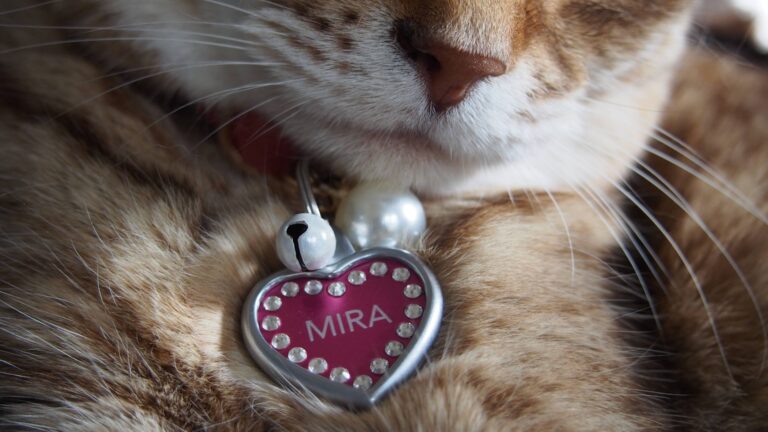
Even though microchips provide essential identification, ID tags still play a critically important role. Both work together, not one or the other.
The primary reason ID tags are necessary is immediate access. If a kind person finds your cat outside seems lost, they are unlikely to have access to a microchip scanner. ID tags exist for this very reason. They are designed to make it easy for anyone to help your cat return home.
A visible ID tag attached to a collar can contain a variety of essential information, such as your cat’s name, your phone number and address, or any special needs like chronic health conditions.
Thus, it is important for your cat to wear collar with ID tags. While microchips are allowed to access only for authorized individuals, the ID tag works for everyone.
Common Questions About Cat Microchipping
Is it safe?
Yes, microchipping is absolutely safe. The procedure is quick, similar to a routine vaccination. Your cat experiences minimal to no pain and the entire process is complete in just a few seconds.
How much does it cost?
Even though cats from Whisker Home are already microchipped, the initial microchipping cost is relatively low, usually between $25 and $50 depending on your location and veterinary hospital. Investing in a microchip is a small decision with a potentially huge impact, providing peace of mind and security for you and your cat.
How long does microchip last?
Microchips have a typical lifespan of about 25 years which is far beyond the lifespan of cats and there is no need for maintenance and replacement

Protecting Your Cat
Losing a cat is every owner’s worst fear, but it is also highly preventable.
As we’ve explored, identification consists of two essential elements. Microchips provide lifelong, permanent identification, while ID tags offer instant, universal access to your contact information. Together, they create the most reliable and safe system for every cat. A single scan of a microchip can truly save your cat’s life and bring them safely back home.
Because every cat deserves to safely return to their beloved family. By paring a microchip with a visible ID tag, you give your cat the ultimate protection and provide yourself with invaluable peace of mind.
If you ever find a stray cat, please take action! Bring it to a local vet or animal shelter to see if it has a microchip. Your simple act of care could reunite a lost pet with their beloved owner.
Explore Whisker Home’s microchipped cats waiting for their forever homes.